
How to Create a Pet Evacuation Plan in the UAE
Learn how to create a pet evacuation plan in the UAE to protect your furry friends during emergencies like sandstorms and floods.
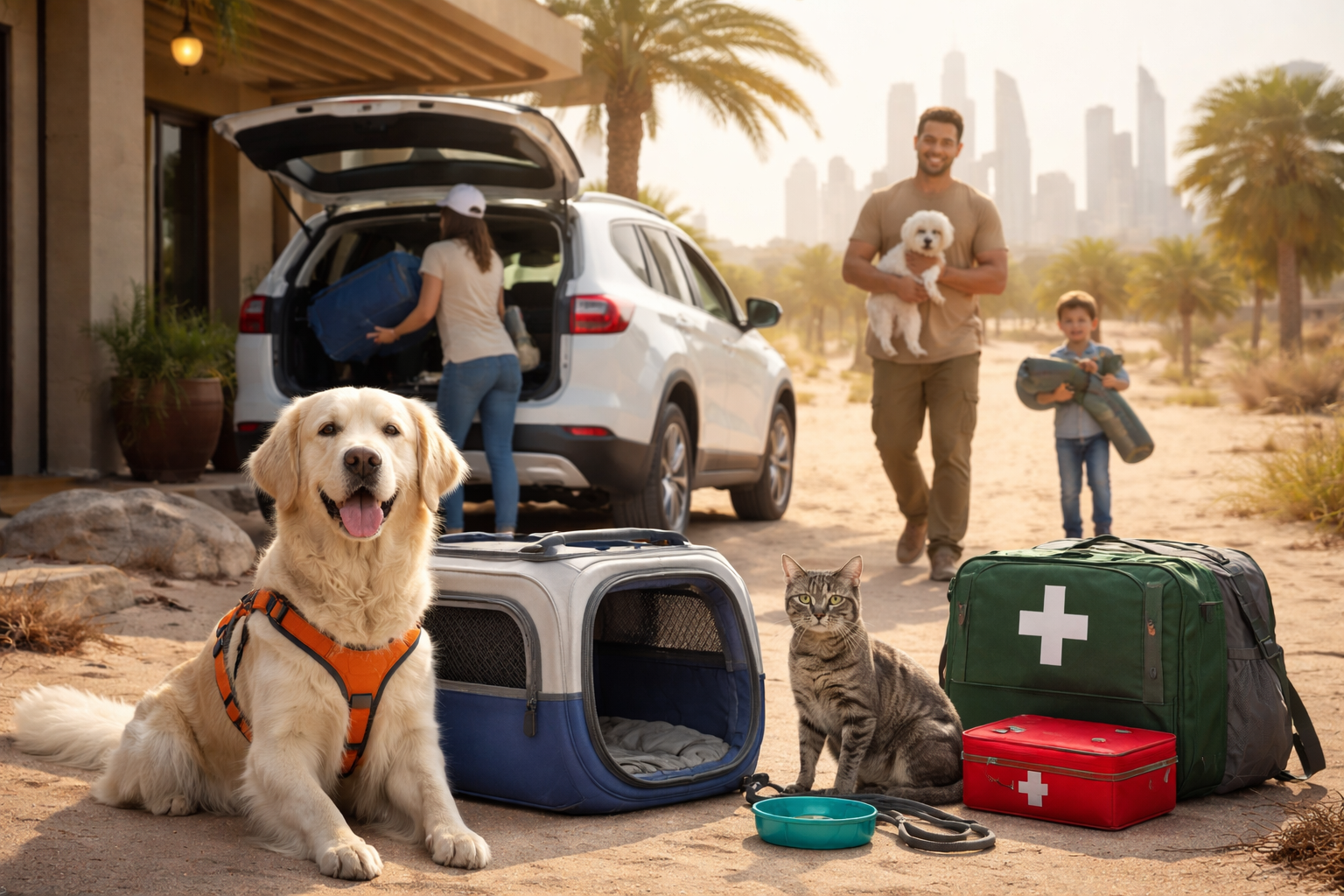
Introduction
In the UAE, extreme weather like sandstorms, flash floods, and soaring summer temperatures can put pets at risk. Urban challenges, such as high-rise living and crowded areas, make evacuation even more complex. A solid pet evacuation plan saves time, reduces stress, and ensures your pet's safety during emergencies. Here's what you need to do:
- Pack an Emergency Kit: Include food, water, medications, cooling mats, waste bags, and pet carriers with proper ventilation.
- Plan Escape Routes: Identify multiple evacuation routes and pet-friendly accommodations in advance.
- Assign Family Roles: Designate tasks like securing pets, packing essentials, and managing transport.
- Practice Drills: Regularly rehearse evacuations with your pets to ensure they stay calm and cooperative.
- Stay Ready: Keep your pet's ID, vaccination records, and emergency contacts updated.
Act Now
Start preparing today to protect your pets when emergencies strike.
Emergency Risks Pet Owners Face in the UAE
Sandstorms, Floods, and Heat Waves
The UAE's extreme weather patterns present serious challenges for pet owners. Heat waves are a constant threat, with Dubai ranking among the cities experiencing dangerously high summer temperatures on 89% of summer days. The Gulf region is warming faster than the global average, making these conditions more severe each year.
Temperatures in the UAE frequently exceed 40°C, with nearby areas recording highs of 51°C. Such intense heat can quickly lead to heat stroke, organ failure, or even death in pets, especially those with thick fur or respiratory issues.
Flash floods are another significant risk. In April 2024, the UAE experienced its heaviest rainfall in 75 years, with some areas in Dubai recording over 250mm of rain in less than 24 hours. To put this into perspective, Dubai's average annual rainfall is only 97mm. The state-run WAM news agency described the event as "historic", noting it broke records dating back to 1949. These floods disrupted transportation and infrastructure. For pets, sudden flooding can result in dangerous situations where they may become trapped, swept away, or separated from their families.
Sandstorms add another layer of risk by reducing visibility and exposing pets to harmful airborne particles. Combined with high winds and flying debris, these conditions make outdoor evacuations extremely hazardous.
Climate change is amplifying the frequency and intensity of these extreme events. For example, Saudi Arabia has warmed at a rate 50% higher than the rest of the Northern Hemisphere over the past four decades. This trend highlights the importance of proactive planning for pet safety in the face of worsening conditions.
City Living Challenges: High-Rise Buildings and Crowded Areas
Urban living in the UAE brings its own set of obstacles when it comes to pet evacuation. High-rise buildings, which dominate cities like Dubai and Abu Dhabi, often lack pet-specific evacuation protocols in their emergency plans. Recent incidents have exposed weaknesses in these structures.
Elevators, frequently used to transport heavy or multiple pets, are unsafe during emergencies such as fires. Narrow staircases and congested hallways further complicate evacuation efforts, delaying escape and increasing the risk of injuries.
A study of accidents in Sharjah between 2013 and 2020 revealed a rise in fire incidents in residential buildings, underlining the need for better fire management systems in high-rises. Additionally, densely populated areas like Dubai Marina, JLT, and Abu Dhabi Corniche can elevate stress levels for pets during emergency evacuations.
With 85% of the UAE's population living in low-lying areas prone to flooding and rapid urbanisation exacerbating flash flood risks, pet owners in vertical communities must develop tailored evacuation strategies to address these unique challenges.
Don't Wait Until It's Too Late: Emergency Evacuation Tips for You & Your Dog
Building a Complete Pet Emergency Kit
Preparing an emergency kit for your pet is not just a precaution - it's a necessity, especially when living in a region like the UAE. The country's extreme weather and urban challenges demand a kit tailored to local risks, ensuring your pet's safety and comfort during a crisis. Every item in your kit should address specific needs, forming an essential part of your overall emergency strategy.
Basic Supplies Your Pet Needs
At the heart of any pet emergency kit are food and water. Pack enough dry food and water to last through the emergency, with a little extra in case of unexpected delays. Use waterproof containers to shield food from humidity, and include collapsible bowls for easy feeding and hydration.
Medications are another critical component. Store essential medicines in insulated containers to protect them from heat, and add basic first aid supplies like antiseptic wipes, bandages, and a digital thermometer.
Given the UAE's hot climate, climate-specific items are indispensable. Cooling mats or vests can help regulate your pet's body temperature, while lightweight blankets or familiar toys can provide comfort during stressful situations.
Don't forget hygiene essentials. Waste bags, cleaning wipes, and extra towels are invaluable for maintaining cleanliness, particularly during events like sandstorms or prolonged emergencies.
Selecting Pet Carriers and Safety Equipment
Safety starts with the right carrier. Choose one that allows your pet to stand, turn, and lie down comfortably. Ventilation is crucial in the UAE's heat, so opt for carriers with multiple mesh panels or ventilation holes for proper airflow.
When deciding between hard-sided and soft-sided carriers, consider your circumstances. Hard-sided carriers offer better protection and insulation, making them ideal for car evacuations and tougher conditions. On the other hand, soft-sided carriers are lighter and more convenient for air travel but may not withstand harsher environments as well.
If air evacuation becomes necessary, ensure the carrier meets standard airline-approved dimensions - typically around 46 cm x 28 cm x 28 cm. Always check specific airline policies for additional requirements.
Customise carriers for seasonal needs. Cooling pads can help in hot weather, while insulated padding is useful for cooler conditions. Include a sturdy leash and a well-fitted harness to keep your pet secure during evacuations. Having a backup leash is also a smart move.
Gathering Important Papers and Pet ID
Organising your pet's critical documents is just as important as packing supplies. Keep physical copies of vaccination records, medical history, and treatment plans in waterproof bags. These documents can be lifesavers if veterinary clinics are temporarily unavailable.
Make sure your pet's microchip details are up to date in the registry, and regularly update your contact information. Carry recent photos of your pet to aid in reunification if separation occurs.
Include emergency contact details, such as your veterinarian's information and the nearest emergency animal hospital. Ensure your pet's ID tags are current, featuring both local and international contact numbers. For pets with medical needs, consider adding a medical alert to their tags to provide essential guidance during emergencies.
Making and Testing Your Pet Evacuation Plan
Creating an evacuation plan that works smoothly takes careful planning, clear communication, and regular practice. In the UAE, where unexpected events like sandstorms and flash floods can happen, it's especially important to ensure every family member knows their role. This way, your pets can stay as calm and safe as possible during an emergency.
Assigning Tasks to Family Members
Clear roles and responsibilities can make a world of difference when time is tight. Start by designating a primary pet handler - someone your pet feels most comfortable with. This person will be in charge of securing and transporting your pet, along with carrying the emergency kit and any important documents.
Other family members can take on tasks like packing the car, securing the house, or grabbing last-minute essentials. Even younger family members can be given simple responsibilities to keep them involved.
It's also smart to prepare a contact plan. In the UAE's diverse and multicultural setting, make sure everyone has a list of both local and international contact numbers. Designate an out-of-area contact who can help share information if local communication networks fail.
To stay organised, write down each person's tasks on a checklist and post it somewhere visible. This way, everyone knows exactly what to do when stress levels are high. Once roles are assigned, focus on mapping out clear escape routes and identifying safe places.
Mapping Escape Routes and Finding Safe Havens
Before an emergency strikes, take the time to research multiple evacuation routes. With the UAE's rapidly changing urban landscape and unpredictable weather, having several options is key. In busy cities like Dubai and Abu Dhabi, traffic can quickly become a problem during evacuations. Plan at least three different routes from your home to safe locations, keeping in mind potential road closures due to floods or sandstorms.
Stay informed by connecting with your local emergency management agency and saving your routes on a mobile device for quick access. Subscribing to local alert systems, such as CodeRED, can provide real-time updates on weather conditions, road closures, and evacuation routes.
When planning where to stay, prioritise pet-friendly accommodations instead of relying on emergency shelters, which should be a last resort. Research and contact pet-friendly hotels along your routes in advance, and keep their details handy.
Additionally, look into boarding facilities and pet services that operate during emergencies. For instance, Dog House Dubai offers safe pet transport during crises. Make sure your pet's vaccinations and identification are up to date, as many places require proof of these before allowing entry.
Practicing Your Evacuation Plan
Once you've assigned tasks and mapped out escape routes, practice is the next step. Regular drills can make all the difference in an actual emergency. Include your pets in these exercises so they become familiar with their carriers and learn to remain calm during transport. Start with short practice sessions and gradually increase the time to help your pet adjust.
During drills, aim to locate your pet in under 30 seconds. This skill is especially important in sudden situations where visibility might be poor or tensions are high. Practice calling your pet from different parts of the house, rewarding them for responding quickly.
It's also a good idea to practice car evacuations. Begin with short drives and gradually extend the trips to help your pet feel comfortable in the car.
Don't forget to rehearse under various conditions. For example, in the UAE's scorching summer heat, you might need to evacuate during the cooler hours of early morning or late evening.
Finally, revisit and update your plan every six months. Changes in your pet's health, household members, or local infrastructure could affect your strategy. Regularly reviewing your plan ensures it stays effective and keeps your family prepared to act confidently when needed.
Keeping Pets Safe During and After Emergencies
Once you've carried out your evacuation plan, ensuring your pet's safety and comfort remains a top priority. In the UAE, with its unique climate and urban settings, extra care is needed to protect your pet's physical and emotional well-being during emergencies and recovery periods.
Creating a Safe Room for Staying Home
There may be situations, like sandstorms or minor flooding, where evacuation isn't necessary or possible. In such cases, setting up a safe room can help keep your pet protected while staying indoors. Choose an interior room, such as a bathroom or utility room, that has no windows. Equip this space with essentials like food, water, bedding, and familiar items to help reduce your pet's anxiety. Make sure the room stays at a comfortable temperature. Once your pet is secure, focus on keeping them calm and reassured during the emergency.
Calming Stressed Pets and Providing Basic First Aid
Pets often show signs of stress during emergencies, such as panting, hiding, pacing, shaking, or changes in appetite. To help soothe them, try using pheromone sprays, playing calming music, or wrapping them in a snug blanket. Maintaining familiar routines can also help minimise their anxiety. Once the situation stabilises, gradually return to normal schedules. If your pet continues to display unusual behaviour, seek advice from a veterinarian or animal behaviourist.
Keeping Emergency Contact Information Current
Always have emergency contact details readily available. Save important numbers on your phone and post them somewhere visible at home. Confirm whether your regular veterinarian offers 24-hour services or if you'll need an alternative option.
Zabeel Veterinary Hospital
+971 56 655 0942 (24/7) / +971 4 334 0011 (daytime)
"In the event of an emergency, even during normal business hours, please call ahead of time so that we can prepare for your arrival and get all necessary staff and equipment ready to ensure that your pet gets the needed attention as fast as possible." — Zabeel Veterinary Hospital
Safety First
"Your safety comes first. Once outside, immediately alert firefighters and emergency workers to the presence and likely location of any pets still inside." — Dr Rachel Shaw, vet and chief executive of Animal Welfare Abu Dhabi
This advice is particularly important in the UAE, where high-rise buildings can make evacuations more challenging and time-sensitive.
Finding Pet Supplies and Support Services in the UAE
When preparing an evacuation plan, having dependable sources for pet supplies and emergency services is essential. In the UAE, pet owners have access to a variety of resources that make it easier to stock up on necessities and secure professional support during emergencies.
Getting Supplies from The Pets Club
The Pets Club offers a wide selection of emergency essentials, including carriers, food storage containers, first aid kits, and other pet accessories. They provide free shipping on orders over AED 100 and ensure quick delivery, either on the same day or the next. This makes it convenient to order items like extra food, water bowls, blankets, and carriers all at once. Their emphasis on premium brands and knowledgeable customer support helps ensure you're getting high-quality products to keep your pet safe. Beyond supplies, local services play an important role in improving your emergency preparedness.
Using Local Services for Emergency Planning
A well-rounded evacuation plan includes access to timely support and services. The Pets Club is set to expand its offerings with mobile grooming, pet relocation, and aquarium maintenance services, which can be valuable additions to your emergency strategy.
Across the UAE, numerous local providers offer key services to assist during emergencies:
- Modern Vet Mobile Clinic: Provides at-home veterinary care for AED 499 per visit (offer valid until the end of June).
- Vets24 in Ras Al Khaimah: Specialises in pet relocation, including health checks and documentation, with fees ranging from AED 500 to AED 2,500.
- Carry My Pet in Dubai: Offers customised travel plans, expert pet handlers, and live tracking for pet relocation.
- Mobile Pet Grooming Services: Companies like Pets in the City and Shampooch operate in Dubai, Sharjah, and Abu Dhabi, helping pets and their owners regain a sense of normalcy post-emergency.
Conclusion: Stay Ready to Keep Your Pets Safe
Putting together a pet evacuation plan is just the beginning. To truly keep your pets safe, you need to stay proactive with regular drills and supply updates. In the UAE, emergencies like sudden sandstorms or flash floods can happen without warning, so your plan needs to be more than just a document on a shelf - it has to be a living, actionable strategy.
Practice makes perfect, even when it comes to emergencies. Regular evacuation drills with your pets can help you spot potential problems early. Use different escape routes during these rehearsals to ensure you're ready for any scenario. Over time, your pets will become familiar with their carriers and the process, which can significantly lower their stress levels during a real emergency.
Keep your emergency kit up to date. Replace expired items, double-check that identification tags are current, and ensure your pet's microchip information is accurate. Every family member should know their specific role in the plan so that everyone can act quickly and confidently when needed.
Stay informed by monitoring weather alerts and keeping an updated list of emergency contacts, pet-friendly accommodations, and veterinary clinics. These steps align with expert advice.
"If you have a plan in place for you and your pets, you will likely encounter less difficulty, stress and worry when you need to make a decision during an emergency." — Ready.gov
The effort you put into preparation today could make all the difference tomorrow. By practicing your plan, updating your supplies, and staying informed, you'll be ready to act when seconds matter most. Emergencies don't wait, and neither should you. Regularly reinforcing your strategy ensures that you're fully equipped to protect your pets in the UAE.
FAQs
Shop Related Products
Browse our curated selection of pet products recommended by our team.
Visit StoreNever Miss a Post
Join thousands of pet lovers. Get the latest articles, tips, and product reviews delivered straight to your inbox.
Related Articles

New Study Reveals Dogs Can Detect Stress in Humans
Groundbreaking research confirms what dog owners have long suspected — our pets can literally smell our emotions.

Pet Adoption Rates Surge to Record Highs in 2026
Animal shelters across the country report unprecedented adoption numbers, with many shelters reaching near-empty kennels.

Dubai Investment Park (DIP 1) – 2026 Local Guide
A friendly 2026 local guide to Dubai Investment Park Dubai (DIP 1): metro station R74, feeder bus tips, commute plans, living guidance, schools, hospitals, and FAQs.